A man will spend six weeks choosing a pistol and about eleven seconds deciding where it’s going to live.
You see it at the counter constantly. He’s read every review and argued triggers for a month. Ask him what his wife does when the glass breaks and he looks at you like you changed the subject.
He didn’t buy a home-defense plan. He bought a gun, which is maybe twenty percent of one.
The rest is decisions, and you’ll make every one of them either now — in daylight, at the kitchen table, with your family — or at 2:40 in the morning with your heart rate at 160 and one shoe on. The night doesn’t care that you never thought about it. It just starts asking.
Something wakes you. Glass, a door, a sound that wasn’t there a second ago. First question the house asks: where’s the gun, and can you get to it?
Nobody answers that one honestly, because the honest answer has a conflict in it. The fastest gun to reach is the one on the nightstand — which is also the one your six-year-old can reach, or the friend’s kid at the sleepover who opens every drawer in your house because he’s nine and that’s what nine does. The one that’s safe from all of them is locked, and locked costs seconds.
Most people land on a quick-access safe. Fine — but owning one isn’t the plan. Open it in the dark. Open it with your off hand, because your good one has the light. If you can’t get in by feel in a couple of seconds, you don’t have a quick-access safe. You have a safe.
Second question, right behind it: can you see?
You cannot shoot what you cannot identify. Not “shouldn’t” — cannot, and it doesn’t bend for anybody’s adrenaline. You do not fire at a sound. You do not fire at a shape. You do not fire at a silhouette in a doorway that’s exactly the right height and exactly the wrong person.
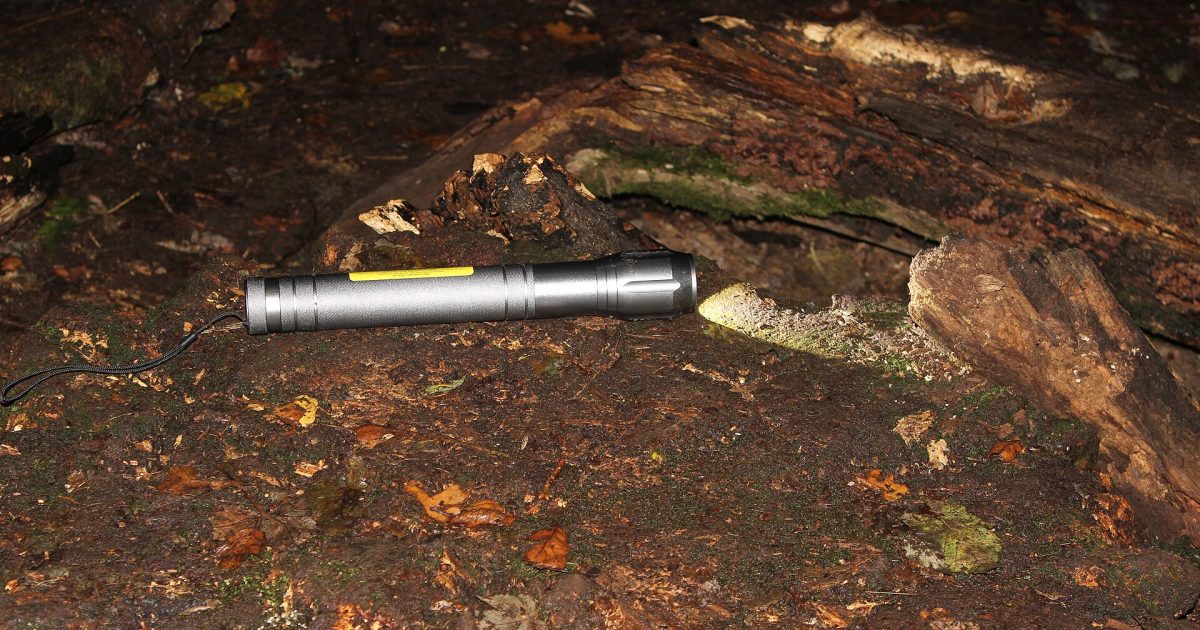
That’s not a scare story. It’s the one that comes back around every year or two — somebody’s kid home early off a flight, a spouse on a shift nobody wrote down, walking into a house with a gun in it and no light. Which is why you keep a light where the gun is, and a handheld beside it if you can, because a weapon light means pointing the muzzle at whatever you want to look at. At night, in your own house, most of that is people you love.
Third question, and it’s the big one: do you go find him, or hold?
Decide that tonight, on the couch, not in the hallway. And the honest answer isn’t the fun one: don’t clear your house. Clearing a structure is a team sport, and the teams who train for it full time still get people hurt doing it, because the geometry is merciless. Every doorway belongs to whoever’s already standing there waiting. Alone, barefoot, half awake, with your family behind you, you’d be handing him every advantage you’ve got.
And you have a good one. He came to you. Make that his problem.
So barricade. Everyone into one room, lock it, block it, gun up and pointed at that door and nothing else. If he comes through it you’ve got a known direction, a known distance, a backstop you picked in daylight, and a light in your hand. That isn’t hiding — it’s an ambush, and it’s yours.
The only thing that moves you out of that room is somebody you love who isn’t in it. Which is why the next part matters as much as the gun.
Pick a rally point, and know where your people are before you take a single step. Everybody comes to one room — usually yours, because that’s where the gun and the phone are. Kids old enough to move on their own do; the small ones stay put behind a locked door and you come to them. Then count heads before you decide anything, because “we’re all here” and “where’s Sam” are two completely different nights.
Somebody calls 911, and if there’s a choice it isn’t the person holding the gun. Speaker on, line stays open — that recording is your record.
Address first, twice, because the rest is useless if they can’t find you. Then what’s happening. Then the part civilians never think of: describe yourself. “I’m the homeowner, I’m armed, back bedroom upstairs, gray t-shirt, three of us in here.” Those officers are walking into a dark house they’ve never seen knowing only that somebody inside has a gun, and what the dispatcher wrote down is most of what keeps that from going sideways.
Then it’s over, and you find out that “over” isn’t. A lawful defender still has a long night ahead of him. Police arrive to a house with a hurt man in it and a homeowner holding a firearm — put it down unless you still need it, hands empty and visible, do what you’re told. Getting handcuffed and separated at the scene is common, and it isn’t a charge.
Then say less than you’ll want to. Adrenaline makes people talk, and it also wrecks recall — time stretches, round counts come out wrong, people misremember the order of things they watched happen four feet away. Whatever you get wrong in the first hour is what somebody reads back to you a year later. “That man broke into my home. I was in fear for my life. I’ll cooperate fully, and I want my attorney here first” covers the ground. Put a lawyer’s name somewhere you can find it in the dark.
That’s the plan. Now practice it — not with the gun, but with your mouth and your feet, on a Tuesday evening when nobody’s tired.
Walk it. Say it out loud. “If you hear that, you come here. If you can’t get here, lock your door, get low, don’t open it for anybody but me or a cop. Mom calls. I hold. We don’t go looking.” Say it in the words your kids will still have at 3 a.m., which are shorter and dumber than the ones you’d use at dinner. Schools run fire drills for the same reason and nobody calls that morbid.
Run it twice a year and it stops being something you thought about once. It becomes a memory, and a memory is about the only thing that works at 160 beats per minute.
None of that costs a dime. The gun was the expensive part, and you already bought it. This is one evening in your own house.
Which is precisely why it’s the part everybody skips. Buying something feels like doing something.