Thirty-seven dollars and fifty cents.
That’s what a brand-new Sturm, Ruger & Co. .22 pistol cost in 1949, the first year there was such a thing as a Sturm, Ruger & Co. One gun, one model, one little rented machine shop in Southport, Connecticut, and a price a returning GI could cover without asking his wife.
The guy who set that price had already gone broke once, and recently.
Bill Ruger was a Brooklyn kid, born June 1916. Shooting at six. His own Remington Model 12 pump .22 by twelve. He went down to UNC Chapel Hill, turned a room into a working machine shop, and left without the degree. Around 1938 he designed an experimental light machine gun and laid the drawings out on his in-laws’ dining room table. That gun is what got him hired at Springfield Armory.
The whole arc, from the rented shop to the biggest gunmaker in the country:
From there to Auto-Ordnance, the Thompson people, through late 1944. Winchester wanted him. So did Smith & Wesson. He turned both down.
Then he hung out his own shingle and it fell on his head. His shop made record-player parts and high-end carpenter’s tools, it didn’t sell, and it went into receivership. The man had designed a machine gun on his in-laws’ dining table and couldn’t move a chisel.
That’s the guy who priced a pistol at $37.50.
The story that’s always been told is he had a couple of Japanese Nambus off returning servicemen and liked how the bolt worked, so that’s what went inside. The outside he shaped like a Luger, because every man in America wanted a Luger and almost none of them were going to get one. Then he did the part that actually mattered. Instead of machining the receiver out of solid steel, he made it from two stamped sheet-metal halves welded into a tube, and ran some of the springs off piano wire.
Purists would have called that cheap. Two million-plus sold, and it is still the most popular .22 auto this country ever made. The Mark IV on the shelf at your shop is that pistol’s great-grandkid.
None of it happens without Alex Sturm, a Yale man who wrote and illustrated children’s books before he ever put a dollar into guns. He supplied the $50,000 that started the company, and he drew the eagle that went on the grip. In red.
Go look at the grip of whatever Ruger’s in your safe. That bird is black. Sturm was 28 when viral hepatitis killed him in November 1951, and Ruger changed the eagle to black for him. Three-quarters of a century later the company is still wearing it.
Everybody calls Bill Ruger a designer. He was one. The genius was manufacturing.
Colt had quit building the Single Action Army, and the whole country was watching Westerns and wanting a single-action revolver nobody would sell them. Ruger filled that hole in 1953 with the Single-Six. Right around the same stretch he moved production to investment casting — pour the part close to its finished shape and clean it up, rather than starting with forged steel and turning most of it into chips on the floor. Cheaper, faster, and the parts held up fine. He built his own foundry for it, Pine Tree Castings up in Newport, New Hampshire.
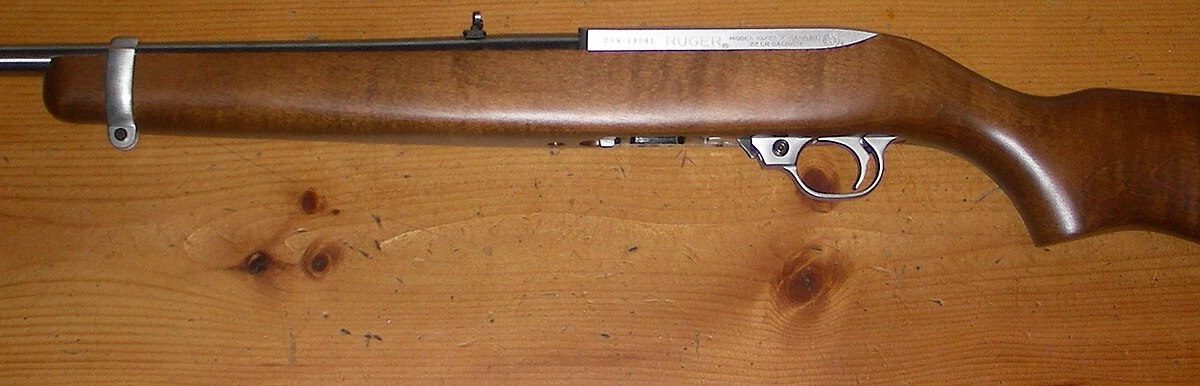
Anybody in this business can draw a gun. Ruger could draw a gun and then invent the way to build a hundred thousand of them at a number a working guy could pay on a Saturday. The 10/22 landed in 1964 and has passed seven million, and you can assemble a complete one without a single Ruger-made part in it, which is the strangest compliment in the industry. Mini-14 in 1973. Twenty million firearms out the door by 2008. Per the ATF’s 2022 numbers, Sturm, Ruger is the largest firearms manufacturer in the United States, ahead of Smith & Wesson.
From a rented shop and a $37.50 rimfire.
And then there’s March 30, 1989.
That’s the day Ruger sent a letter to every member of the United States Congress. His argument was that going after millions of ordinary rifles was the wrong move, and that the smarter play was “to prohibit the possession of high capacity magazines.” Possession. Not manufacture. The ones already in your drawer. A few years later he said it plainer to Tom Brokaw on NBC, and that’s the sentence that stuck to him for good: “No honest man needs more than 10 rounds in any gun.”
The most successful gunmaker in America wrote the other side’s talking point, signed it, and handed it over in the one voice they could never have bought.
Here’s what’s on the record after that, and not an inch more. In September 1994 Congress capped new magazines at ten rounds and left the existing ones alone, a narrower thing than Ruger had asked for. The Mini-14 with a fixed stock was on the ban’s exemption list. Those are facts sitting next to each other. I’m not going to wire them together for you, because I can’t, and inventing the connective tissue would be doing to Ruger roughly what his letter did to the rest of us.
He died July 6, 2002, at 86. R.L. Wilson called him “a true firearms genius who mastered the disciplines of inventing, designing, engineering, manufacturing, and marketing better than anyone.” Fair call. There are also still men who will walk past a used Ruger on the rack on principle, and I’m not going to tell them they’re wrong.
That’s why it stings. Bill Ruger spent his whole life figuring out how to put a good gun in the hands of a guy who couldn’t afford one, and then he stood up and told the country there was a number past which that guy shouldn’t be trusted.
Take the 10/22 out this weekend anyway. Every one of them traces back to a thirty-seven-dollar-and-fifty-cent pistol built by a man fresh out of bankruptcy, which is still the best money anybody in this business ever spent. Adjusted for a lot of things.