Ask any top-level shooter — competition, military, doesn’t matter — how much of their practice happens with live ammunition, and the answer will surprise you. Most of it doesn’t. The best trigger pullers on the planet spend more time pressing triggers on empty guns than loaded ones, and it’s not because they can’t afford ammo.
It’s because dry-fire is where the actual learning happens.
Here’s the problem with live fire: recoil is a liar. The gun goes bang, the muzzle jumps, and whatever your trigger finger did wrong in that last eighth of an inch gets buried under the blast. You can jerk a trigger for twenty years at the range and never see it, because the gun covers for you every single time. Take the ammunition away and there’s nowhere to hide. The front sight tells you exactly what your finger just did. That’s the whole secret. That’s why the pros do it.
And it costs you nothing. No range fee, no ammo bill, no drive across town. Ten minutes in your hallway.
But first, the part that isn’t optional.
The Ritual
Dry-fire is safe the way a chainsaw is safe — completely, as long as you respect the procedure every single time. So here is the procedure, and it is a ritual, not a suggestion:
- Unload the gun. Magazine out, chamber empty.
- Remove every round of ammunition from the room. Not to the other side of the table. Out of the room. Loaded magazines, loose rounds, the box in the drawer — all of it goes somewhere else.
- Check the chamber. Look at it. Then touch it — a finger in the chamber confirms what tired eyes can miss.
- Check it again. Yes, again. You just checked it — check it anyway. This is the habit that saves you on the day you’re tired or distracted.
- Pick a backstop that would actually stop a bullet. A brick wall, a basement wall, a corner of the house with nothing but dirt behind it. Not the drywall between you and the kids’ rooms.
Every session. Every time. No exceptions, no shortcuts, no “I just checked it an hour ago.” The ritual is the price of admission, and it’s a bargain.
One equipment note: if you shoot a rimfire, check your manual before dry-firing. Many rimfire designs let the firing pin strike the edge of the chamber on an empty gun, and that will peen your chamber over time — use snap caps. Most modern centerfire guns dry-fire all day without complaint, but snap caps never hurt anything, and your manual gets the final word.
The Ten-Minute Session
Minutes 1–3: Slow trigger presses. Aim at a small mark on your backstop wall, focus hard on the front sight, and press the trigger slowly enough that the break almost surprises you. Watch what the sight does. The classic diagnostic: balance a coin or an empty case on the front sight and press. If it stays put, your press is clean. If it falls, your finger just confessed to what it’s been doing at the range all along. This drill has humbled better shooters than either of us.
Minutes 4–6: Draw and present. From concealment if you carry and it’s legal where you live; from a ready position if not. Slow and perfect beats fast and sloppy — the speed shows up on its own once the movement is clean. Full draw, sights on the mark, clean press, back to the holster. Repeat.
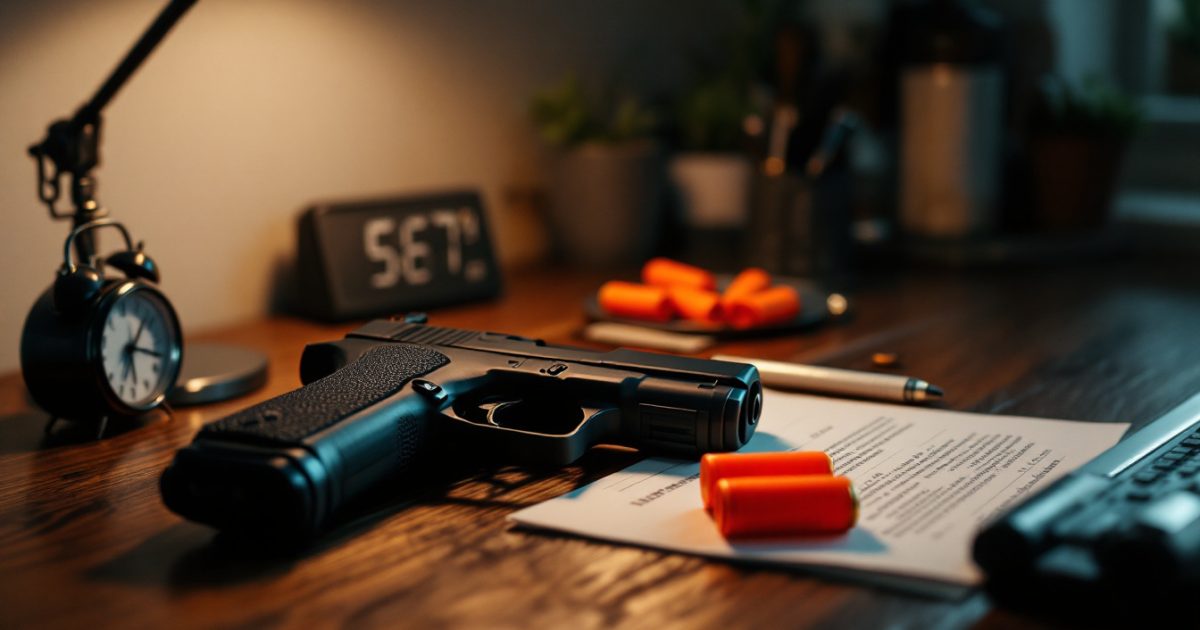
Minutes 7–9: Reloads and manipulations. Dummy rounds only — the bright orange or blue kind that cannot be mistaken for live ammunition. Magazine changes, slide work, malfunction clearance. Same rule: smooth first, speed later.
Minute 10: Put it away. The session is over. This one gets its own paragraph, because it matters more than the other nine minutes combined. When you reload the gun and put it back in service, dry-fire is finished for the day. Not one more rep. Not one quick draw to see how the new grip feels. A disturbing share of the negligent discharges connected to dry-fire happen exactly here — at the end, after the ammunition comes back into the room, when somebody decides to practice just once more with a gun that is no longer empty. The session ends when the gun goes away, and it stays ended.
How Often
Three or four ten-minute sessions a week beat one heroic hour on Saturday. Skill is built by frequent, focused repetition, not marathons — your hands remember what they do often, not what they did once for a long time.
That’s it. No gear to buy, no fees to pay, no excuses left. It’s the cheapest training in the gun world and the most honest, because an empty gun can’t flinch for you.
And remember why it works in the first place: your trigger finger doesn’t know the gun is empty. Train it accordingly.