Everybody’s got one.
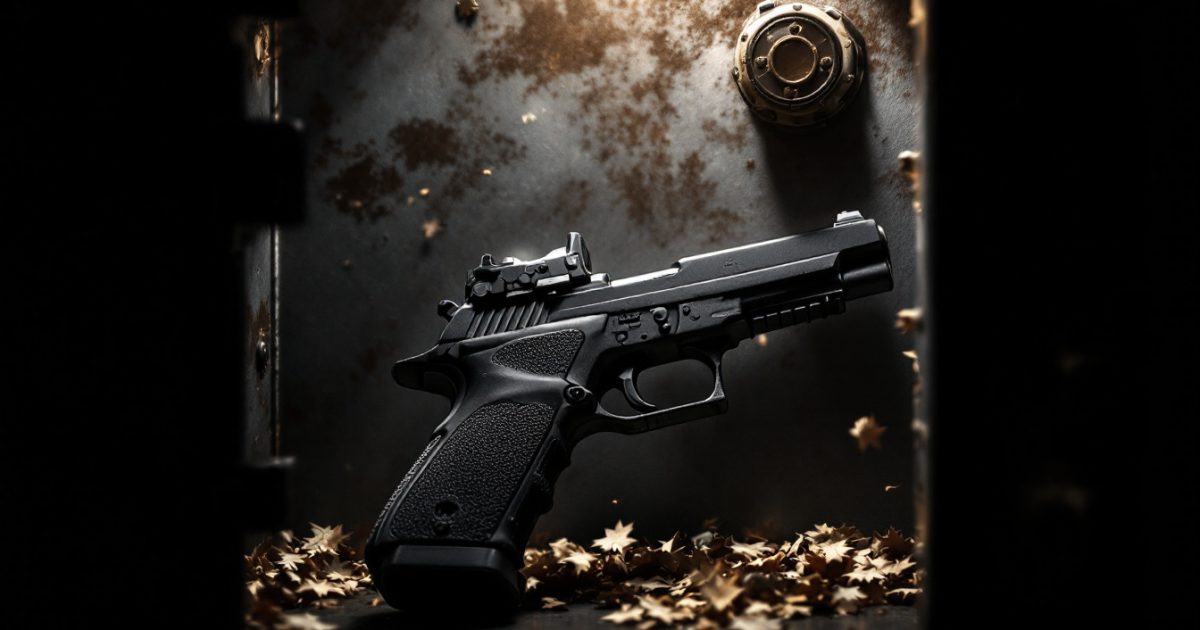
Bottom of the safe, or the back corner behind the ones you actually use. A shotgun with a stock somebody refinished badly in 1978, or a .22 with most of the bluing worn off the receiver where a hand went a few thousand times, or a service revolver that was issued to a man who is not here to tell you about it.
It isn’t your best gun. Depending on how the years treated it, it may not be a gun you’d choose for anything. You’ve thought about selling it twice and not done it either time, and if somebody offered you fair money tomorrow you’d find a reason.
I want to talk about why, because I don’t think it’s sentimentality, exactly. I think it’s something more specific than that.
A gun is one of the very few objects a man uses hard, maintains personally, and does not wear out. Think about what else goes into a box when somebody dies. Clothes, which went out of fashion. Tools, which got replaced. A car, long gone. A watch, maybe, if he was the kind of man who had one — and a watch sits on a wrist and does nothing.
The gun got handled. Deliberately, with attention, every single time. Nobody has ever picked up a firearm casually. That’s the entire point of how we’re taught to treat them, and it means every contact that object ever had with your father was a contact he was paying full attention to.
So the wear on it isn’t damage. It’s a record. The bluing gone from exactly where his hand went. A ding in the stock from a day he’d have told you about. The fact that it’s clean — because the last person to put it away cleaned it, out of a habit he never once thought about, and then didn’t come back.
That’s not sentiment. That’s just what the object is.
And here’s the thing I’d actually argue with you about, if we were standing at the counter.
A lot of these guns sit for decades untouched, and I understand the instinct — it’s the last one that isn’t a photograph, and you don’t want to be the one who puts a scratch in it. But I think that’s backwards. I think a gun that’s never fired again has been turned into a headstone, and the man it came from would have thought that was a hell of a thing to do to a perfectly good rifle.
Shoot it. Once a year, on a day that means something, or on no day at all.
If it’s a mechanically sound gun in a cartridge you can still buy — and an awful lot of them are, which is its own argument about how these things were built — take it out and run a box through it. Get a smith to look it over first if it’s been sitting since the Carter administration, because old ammo, old springs and old steel deserve a set of eyes. But then shoot it.
Take somebody with you who’s got the same last name. Let them shoot it too, badly, and tell them whose it was while they’re holding it. That’s the transfer. Not the paperwork, not the eventual will — the twenty minutes where a kid holds the thing and hears the story at the same time, which is how human beings have always actually passed anything down.
What doesn’t survive is the knowing. The gun will outlast all of us, that part’s settled. What won’t is that this was Grandpa’s, that he bought it the year he came home, that he called it something ridiculous. Two generations of silence and it’s just an old shotgun in a safe, and somebody’s grandson sells it at an estate sale for less than it’s worth and never knows he’s doing anything.
So write it down. An index card in the case is fine. Who, when, where, one story. Ten minutes, and it’s the only part of this that can be lost.
Then put it back in the safe, where it’ll sit being worth more than the money.