
There’s a federal statute that was written to solve exactly the problem you’re thinking about.
You live in a free state. You’re driving to another free state. Between them is a state where your perfectly legal pistol is a felony, and you’d rather not add eleven hours to the trip going around it.
The law is 18 U.S.C. § 926A. It came out of the Firearm Owners’ Protection Act in 1986, and gun people call it safe passage. It says, in substance, that if you may lawfully possess and carry the firearm where your trip starts, and you may lawfully possess and carry it where your trip ends, you’re entitled to transport it between the two — and no state or local law can touch you for it.
That’s real. It’s on the books. It’s been there for forty years.
Now here’s the part that costs people everything, and I want to be precise about it rather than dramatic.
926A protects transporting. It does not protect stopping, staying, or carrying. The protection attaches to a journey, and every condition in the statute has to hold the entire time.
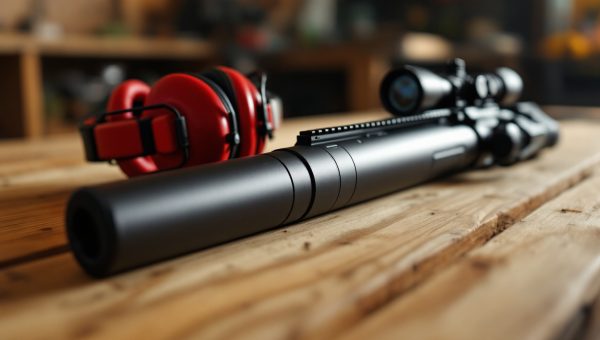
The conditions are specific. The firearm has to be unloaded. It has to be in a locked container — and the statute says the container cannot be the glove compartment or the console. In a car without a separate trunk, you’re putting it in a locked case as far from the driver as you can manage. Ammunition is handled separately; the safe move is a different locked container entirely, because the statute wants the gun not readily accessible and a loaded magazine sitting on top of the case is an argument you don’t want to have on the shoulder of a highway.
And then the one that actually catches people: it has to be a trip. Continuous. The further you drift from “driving through,” the less the statute is doing for you. An overnight stop is a question. A week at a relative’s house is not transportation by any reading. Detouring somewhere that isn’t on the way is a prosecutor’s favorite fact.
Here’s the harder truth, and it’s the reason I’m writing this instead of just quoting the statute.
926A has generally functioned as an affirmative defense, not a shield against arrest. That distinction is everything. An affirmative defense is something you raise after you have been arrested, booked, charged, and have retained a lawyer. It is a thing that wins in a courtroom months later. It is not a thing that keeps you out of handcuffs on the Jersey Turnpike, and the published appellate law on this is not a comfortable read — there is a well-known body of cases out of New York and New Jersey where travelers who believed they were covered spent real time in the system before any of it got sorted.
The officer at your window is not required to accept your reading of federal law. He is going to arrest you on the state charge, and your federal protection becomes your attorney’s problem.
So what do you actually do.
Before the trip, check the law where you start, where you end, and every state the route crosses — and check it at the state’s own source rather than a forum post from 2019, because this stuff moves. Unloaded, locked, separated from ammo, out of reach, and out of the passenger compartment if the vehicle has anywhere else to put it. Keep it a trip: fuel, food, sleep if you must, and nothing that looks like a destination.
And route around the genuinely hostile jurisdictions when you reasonably can. I know what that costs in hours. It costs less than the alternative, and anybody who has been through the alternative will tell you the same thing.
One note on flying, since somebody always asks: that’s a different set of rules entirely — the airline’s, TSA’s, and the law of wherever you land — and the fact that your checked bag was legal in the city you left means nothing about the city you arrive in. Different article.
The statute is good law and it’s worth knowing. Just know exactly what it is. It’s a defense you raise, not a card you show.