The first genuinely cold morning hit most of the country in the last week or so, and you did what everybody does. Grabbed a jacket off the hook on the way out the door.
And in that one motion you took a draw you’d built since April and replaced it with one you’ve never practiced.
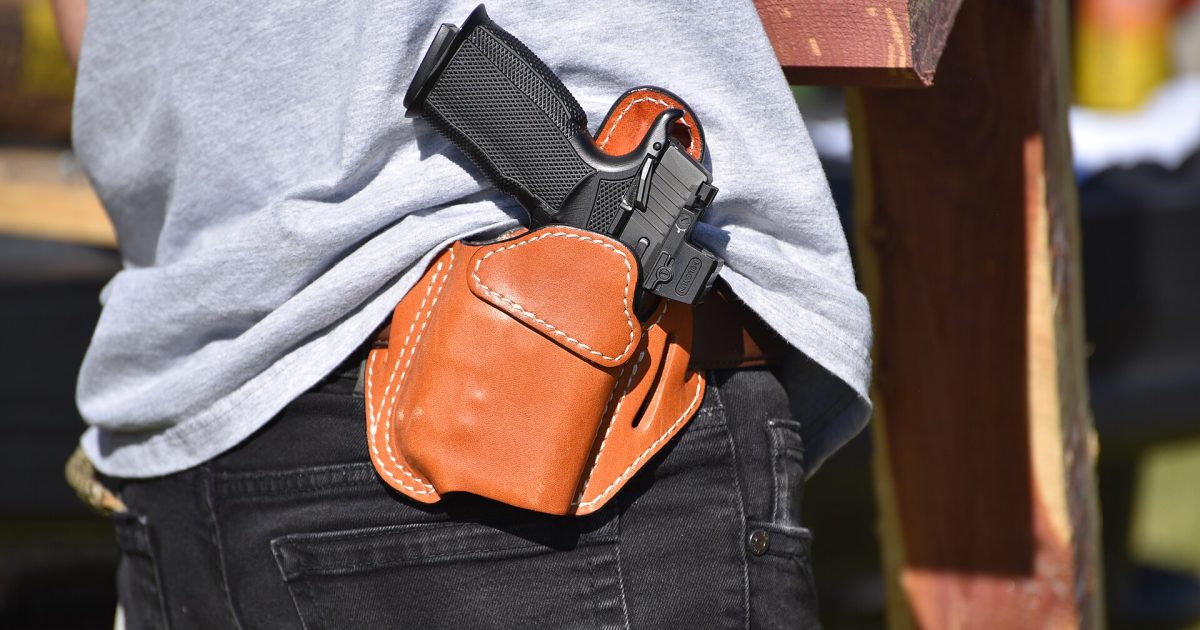
Think about what’s actually on top of your gun right now versus what was there in July. In July it was a t-shirt. One layer, thin, no weight to it, and it got out of the way if you so much as thought about it. Today there’s a jacket over the shirt, and it’s heavier, and it’s stiffer, and depending on the morning it’s zipped.
Nothing about the gun changed. Everything about getting to it did.
Here’s the part that catches people, and I’ve watched it catch good shooters at the range in November. A t-shirt sweeps with one hand because it’s light enough to stay where you put it. A canvas work coat does not. It comes up, and then it comes right back down on your hand while you’re trying to establish a grip, and you end up with a fistful of coat and gun together. That’s not a slow draw. That’s a stuck one.
So the first honest question is whether your cover garment this time of year is an open-front jacket or a closed one, because they’re two completely different problems.
Open front is the easier of the two and it’s still not free. The move most people land on is clearing it with the support hand while the strong hand goes to the gun — a real sweep, hand flat, carried past the holster and held there, not a polite little flick. The flick works on a t-shirt in a mirror. It does not work on a Carhartt in a parking lot.
Weight helps you here, which is the one gift the season gives you. A heavier hem carries farther when you drive it. That’s also why some guys drop something in the bottom corner of the pocket all winter — a glove, a spare mag, a folded bandana. It gives the panel a little mass so it goes where you sent it and stays there a half second longer.
Closed front is a different animal, and if you zip up you need to have decided this in advance. There’s a lift-and-draw — grab a fistful of the garment at the centerline, pull straight up to your chin or past it, and go underneath with the strong hand. It is slower. It always will be. The reason to drill it anyway is that the alternative is discovering the problem on the worst day you’ve had.
Honest answer most people land on: in a vehicle and around town, the jacket stays unzipped, and the zipper only goes up when the gun’s effectively off the table anyway.
Then there’s the gloves, which almost nobody thinks about until the first time.
A glove changes the size of your hand and takes away most of what your fingertips were telling you. You’ll find the grip is a little different, the safety is a lot different if you’ve got one, and the trigger guard is suddenly tighter than you remembered. None of that is a crisis. It’s just that it’s new information, and the parking lot in January is a bad classroom.
And your belt line moved. A couple of extra layers tucked in pushes the holster out, changes the cant you’re used to seeing, and puts the grip in a slightly different place than your hand has gone nine hundred times since spring. Half an inch is enough to make a clean draw feel clumsy.
Here’s the whole argument in one sentence. Your clothes are equipment.
Nobody treats them that way because nobody buys them that way, but the jacket is sitting between you and the gun just as surely as the holster is, and it gets about one percent of the thought the holster got.
So the thing to do this week, before you forget about it until March, is go stand in your bedroom with an unloaded gun, in the coat you actually wear, with the gloves you actually keep in the truck. Not a hoodie. Not shirtsleeves in a warm house. The real coat.
Pull the magazine, clear the chamber, check it twice and then check it a third time with your eyes and your finger, point it at something that would stop a bullet, and find out what your draw looks like dressed for the weather.
Ten repetitions and you’ll know exactly which of the four things above is going to be your problem this winter.
You’re going to be in that coat until April. Might as well be able to get past it.