A Texas man answered a federal agent’s question honestly — he said he smokes “about every other day” — and for that honest answer, the United States government decided he was too dangerous to keep his guns.
Not for robbing anybody. Not for waving a pistol around. Not even for touching the thing while high. He told the truth to a man with a badge, and Washington tried to strip a constitutional right off him like lint off a jacket.
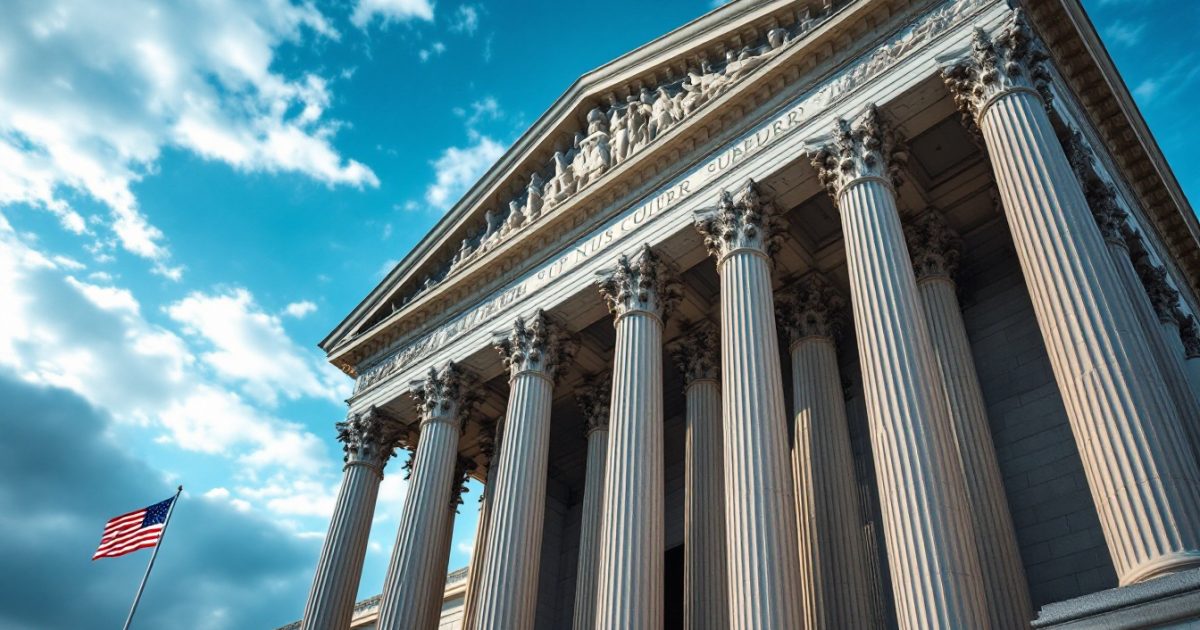
Well, this week all nine Justices of the Supreme Court — every last one, the liberals and the conservatives, the ones who can’t agree on whether the sky is up — looked at that and said no. Nine to nothing. Let that number sit there a minute.
The Law Nobody Could Explain
The weapon Washington used was 18 U.S.C. § 922(g)(3), a leftover from 1968 that bans guns for any “unlawful user of or addicted to any controlled substance.” Sounds tidy on paper. Then you ask the question a fourth-grader would ask: what’s an “unlawful user”?
Once a week? Once a year? Once at a Jimmy Buffett concert in 1987? The statute never says. The government couldn’t say either. They marched into the Supreme Court demanding a man forfeit a right written into the Bill of Rights — over a category they flat-out refused to define.
The man was Ali Danial Hemani, and his case became United States v. Hemani. Federal agents tossed his house in 2022 and walked out with a pistol and 60 grams of marijuana. His crime, as best anyone can tell, was being honest about a habit that’s legal to some degree in more than 40 states. For that, the feds wanted him disarmed for good.
When The NRA And The ACLU Get In The Same Line
Here’s the part that ought to snap every gun owner upright. The crowd that lined up behind Hemani wasn’t the usual suspects.
The NRA filed a brief on his side. So did the ACLU. So did NORML, the marijuana-legalization shop. When the National Rifle Association and the American Civil Liberties Union are standing in the same line at the same counter, you are no longer looking at a “left thing” or a “right thing.” You’re looking at the government reaching so far past its arm that two outfits who agree on absolutely nothing turned around and stared at the same time.
And one more wrinkle, just to keep it spicy: this is the same statute they used to convict Hunter Biden. Funny how a law works just fine for years — right up until it lands on a fellow with a famous last name, and suddenly the whole machine gets a fresh set of eyes. But a principle is a principle no matter whose name is on the indictment.
You. Yes, You.
And this is the part that’s got nothing to do with whether you’ve ever so much as smelled the stuff.
You don’t surrender a right enshrined in the Constitution because a bureaucrat slapped you with a label he can’t even define. That’s the whole ballgame, right there. A right you can lose over an undefined word was never a right. It was a privilege on loan, and they were always going to call the loan.
Don’t Go Planting A Flag You Can’t Defend
Now — before anybody fires up a joint, cleans the rifle on the porch, and calls it patriotism — pump the brakes. This ruling is not a permission slip. Gorsuch said so himself. “The Court’s decision is narrow,” he wrote. It doesn’t touch laws against carrying while actually intoxicated, and it doesn’t stop Congress from sitting down and writing careful rules that mean something.
Good. That’s exactly how this is supposed to work. The Court didn’t bless drug use. It refused to let Washington use a sloppy 1968 statute as a master key to your Second Amendment rights. Nobody’s arguing you ought to be armed and stoned at the same time. The argument — the only argument — is that a man minding his own business doesn’t lose the Bill of Rights because a prosecutor couldn’t be bothered to define his own terms.
The List That Just Keeps Growing
Here’s what nobody’s drawing on the whiteboard, so let’s draw it.
Watch how the list of Americans who “can’t be trusted” with a gun has grown — every expansion sold with the same warm reassurance that it’s only for the bad ones. In 1968 they wrote down felons, fugitives, drug users, the “mentally defective.” Tidy enough. In 1994 the Violence Against Women Act swept in people under a restraining order. Then in 1996 came the Lautenberg Amendment, and for the first time in American history a misdemeanor — not a felony, a misdemeanor — could cost you your guns for the rest of your natural life.
Read that pattern left to right. Each step starts with the genuinely dangerous and ends one notch wider than the step before. Felonies became misdemeanors. Convictions became court orders. Court orders became, in Hemani’s case, an honest answer to a question. Give it another decade at that pace and the prohibited-persons list reads like a phone book with your name somewhere in the H’s.
The good news is the Court finally found the brake pedal — and it’s been pumping it. Back in 2022, in the Bruen case, the Justices told the government it can’t just invent a gun rule; it has to match something from the nation’s actual history. In 2024, in Rahimi, they let the feds disarm a man only because a judge had first found he was a “credible threat” to somebody’s safety. Hemani threatened nobody. No judge found him dangerous. He just answered honestly — and that, the Court said this week, isn’t enough. Nine to nothing.
So the trajectory finally bent the other way. For sixty years the only direction the list ever moved was longer. This is the first real tug back toward the Constitution — not the whole rope, but the first honest pull.
Here’s the part that ought to land in your gut. A government that can disarm you over a word it refuses to define isn’t protecting anybody — it’s auditioning the machinery. The list was never really about the dangerous. It was about whether your rights belong to you or to whoever’s holding the pen in a federal building that afternoon.
Nine Justices just answered that. All nine.
Remember it the next time somebody in that building tells you they can take your rights for your own good — and can’t quite explain why.