A New Jersey congresswoman wants to ban the six million suppressors Americans already bought, registered, and paid a federal tax to own. The same device they sell off the shelf at hunting shops in Finland.
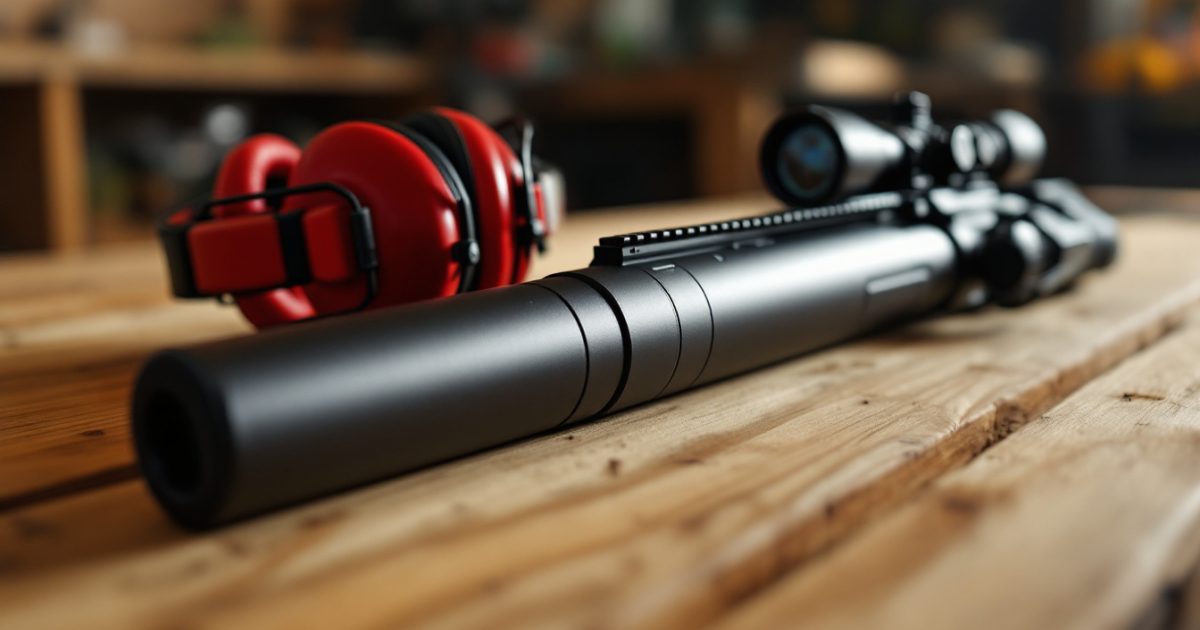
A congresswoman from New Jersey just stood up in the people’s House and declared that the little metal tube that screws onto the end of a rifle to keep you from going deaf is a “tool of murder” with “no legal application.”
No legal application! Somebody better tell the 6.1 million Americans who registered one with the federal government, paid the tax, passed the background check, and waited months for the privilege. Turns out all six million of us have been running murder operations out of the gun safe and didn’t even know it.
The Bill With the Cuddly Name
The thing is called the HEAR Act — “Help Empower Americans to Respond,” because every bill in Washington needs a name that sounds like a charity 5K. Rep. Bonnie Watson Coleman reintroduced it on June 8 with a handful of cosponsors, and it does exactly what it says on the tin: it bans the import, sale, manufacture, transfer, and possession of firearm suppressors nationwide.
Read that last word again. Possession. Not future sales. Not new manufacturing. The thing already sitting in your safe, the one you bought legally, the one the government has your name attached to on a form.
The Firearms Policy Coalition called it what it is — “a confiscation scheme to ban millions of suppressors currently owned by law-abiding Americans.” Which raises a fair question: at what exact moment does the government stop calling six million of its own citizens “law-abiding” and start calling them felons? The answer, per this bill, is ninety days.
“Buy-Back” Is a Funny Word for Something They Never Sold You
Here’s the part they bury at the bottom. The bill gives the Attorney General 90 days to set up a “buy-back” program.
Buy-back. Roll that one around. The government never sold you the suppressor — you did the buying, from a dealer, with your own money, after Uncle Sam took his cut. You cannot buy back something you never sold. What they actually mean is: hand it over, take whatever pocket change we feel like offering, or we amend the federal code so your hearing protection becomes contraband “subject to seizure and forfeiture.”
That’s not a transaction. That’s a stickup with a press release.
The Part That Makes Your Head Hurt
So follow the logic three steps, because the logic is the whole story.
Step one: a suppressor is a “tool of murder.” Step two: it’s so deadly that no responsible adult can be trusted to own one. Step three: it is sold over the counter in Finland, France, Norway, and the United Kingdom — the exact countries this same crowd holds up as enlightened gun-control paradises every time there’s a microphone in the room.
In much of Europe, screwing a can onto your rifle at the range is considered basic etiquette, like not blasting your music on the bus. A British hunter strolls into a shop and buys one off the shelf next to the boot polish. Here, a New Jersey congresswoman wants to make owning that same tube a federal crime. We have officially reached the point where you have more freedom to protect your hearing in Norway than in New Jersey.
What Their Own Numbers Tell You
The timing is the tell. As of early May, there were more than 6.1 million suppressors on the federal registry — and that number jumped by 1.7 million in barely sixteen months, right after Congress zeroed out the old $200 tax.
In plain English: the second the government stopped charging people two hundred bucks for the right to protect their ears, millions of Americans lined up to do exactly that. Peacefully. Legally. On the record. So naturally the response from the gun-control wing wasn’t “huh, maybe these aren’t assassin gadgets after all.” It was “quick, ban them before the registry gets any longer.”
And that registry — the one they spent decades swearing was just paperwork, just a formality, nothing for you to worry your pretty little head about — turns out to be a shopping list. You filled out the form like a good citizen. You wrote your name, your address, the serial number. And now there’s a bill that says the government can come collect.
You. Yes, you. The guy who did everything right — paid the tax, passed the check, waited the wait. This bill isn’t written for the criminal who’d never register a thing in his life. It’s written for you. You’re the only one on the list.
We’ve Seen This Movie Before
Now, this particular bill probably dies. Watson Coleman isn’t running for reelection, the House math isn’t there, and even the friendly coverage admits it’s going nowhere. The mainstream outlets barely mentioned it, which tells you they already know it’s a loser.
But that’s exactly why you should pay attention to it. Trial balloons don’t have to pass to do their job. The HEAR Act has been floated since 2019, dying quietly each time, and each time it drags the next attempt a little closer to normal. First the suppressor was “unregulated.” Then it was “concerning.” Now it’s a “tool of murder.” Give it one friendly Congress and a version of this passes, and the same people will swear up and down they only ever wanted “common-sense reform.”
And here’s the part that should keep you up at night, because it isn’t a hypothetical — it already happened. In 1991, New York City told registered rifle and shotgun owners to surrender, disable, or remove their guns from the city. In 2013, the city mailed letters to gun owners demanding they hand over lever-action and bolt-action rifles — grandpa guns — that the registration list said held too many rounds. California passed its Roberti-Roos registration law in 1989, then quietly kept rewriting the definition of “assault weapon” until legally registered rifles became contraband and the state used its own records to come collect. Every single time, the list of “law-abiding owners” became the address book for the knock on the door.
They told us the suppressor registry was about safety. It was always a map. Remember that the next time a man in a suit promises you a list is nothing to worry about.