
Tomorrow is Veterans Day, and somewhere in your house there is probably a rifle that came home from a war.
Closet corner. Back of the safe. Under the bed in a zippered case that has not been unzipped since the estate was settled. A Springfield, a Garand, an Enfield, a Mauser, a Mosin, a carbine. It belonged to a father or a grandfather or an uncle, and the man who carried it is not here to answer questions about it.
Most people do one of two things with that rifle. They leave it exactly where it is and never touch it. Or they take it to the range on a nice Saturday and run a box of ammunition through it because that seems like the right way to honor it.

There is a third thing, and almost nobody does it, and it takes about an hour.
Go get the rifle. Write down what is stamped on it.
The number that decides whether you can shoot it at all
Start with the 1903 Springfield, because it is the most common American war rifle sitting in American closets and because it carries a genuine hazard that most people who own one have never heard of.
The early receivers were single heat treated. The process was controlled by eye — a man judged the temperature of the steel by its color — and the result was a receiver that could come out hard and brittle instead of tough. A brittle receiver does not bend when something goes wrong. It breaks.
The Army figured this out in the 1920s and changed the process. Rifles built after the change are called high number, and rifles built before it are called low number, and the dividing line is a serial number.
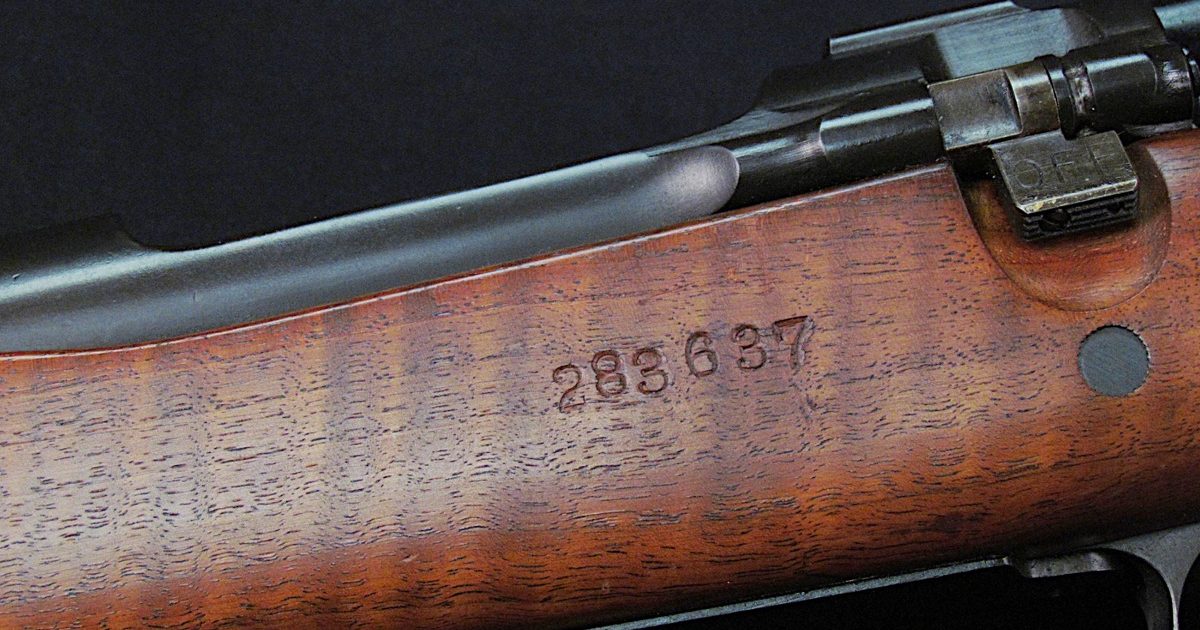
The commonly cited cutoff is around 800,000 for rifles made at Springfield Armory and around 285,500 for rifles made at Rock Island Arsenal. I want to be straight with you about those figures: sources argue about them. Some put the Springfield change between 750,000 and 780,000. Some say go to 810,000 to be safe because a few slipped through. Collectors have been fighting about the real number for decades, and there is a serious argument that the failures came from individual overheated forgings rather than from the process as a whole, which would mean the serial number tells you about probability and not about your particular rifle.
Here is the part that is not argued about. The Civilian Marksmanship Program does not recommend firing any Springfield with a low-number receiver. That is the organization that has handled more of these rifles than anyone alive, it has no reason to be dramatic about it, and that is its position.
And it is not only the receiver. The bolts from that era got the same heat treatment and were, if anything, less consistent about it — which means a low-number bolt can be the weak part of a rifle whose receiver is fine.
So the number matters. Find it, look up which arsenal and which range it falls in, and make the decision before you load it, not after.
The rifle sat for seventy years. Have somebody look at it.
Every one of these rifles has the same biography. Hard use, then a long sleep.
Headspace is the measurement nobody can eyeball. It is the gap between the closed bolt face and the shoulder of the chambered cartridge, and when it is wrong the brass case stretches past what it can take. On a rifle that has been rebarreled, reassembled from parts, or put together out of two rifles by a man who is no longer around to explain it — and an enormous number of surplus rifles were — headspace is a real question, not a theoretical one.
A gunsmith checks it with a set of gauges in about ten minutes. He will also look down the bore, check the crown, and tell you whether the thing is a shooter or a wall hanger. That appointment is the whole safety program. Make it before the range trip, not after.
The ammunition is not as interchangeable as the box suggests
Two things here.
The first is corrosive primers. American military ammunition used them into the early 1950s, and a great deal of imported surplus used them for decades after that. Corrosive primers leave salts in the bore that pull moisture out of the air and rust the barrel from the inside while the rifle sits in the case feeling clean. The fix is simple and it is not optional: shoot corrosive ammunition and you flush the bore with water or a water-based solvent that same day, then clean and oil it normally. Skip it and you will find the damage in March.
The second is that a cartridge name is not a promise. The classic example is the 8mm Mauser, where rifles built before and after a design change used bullets of slightly different diameter under names that look nearly identical on a headstamp. Load the wrong one and pressure goes places it should not go. There are other examples. If your rifle’s chambering has a history — and most military chamberings do — that is a question for the gunsmith who is already checking the headspace, not a question for the guy at the ammunition counter.
Leave it alone
Somebody is going to tell you the stock would look beautiful sanded down and refinished, and that the receiver could be re-blued to look new.
Do not do it.
Those dents are the record. The worn spot on the left side of the stock is where a hand went ten thousand times. The cartouche stamped into the wood is an inspector’s mark that tells a collector where and when the rifle was accepted. Sand it off and the rifle stops being evidence of anything and becomes a generic old gun with a nice finish, worth a fraction of what it was and telling you nothing.
Clean it. Oil it. Wipe the metal with a rag. That is the whole program.
The hour that actually matters
Now do the part that has nothing to do with shooting.
Write down the serial number. Write down every stamp and marking you can find on the receiver, the barrel, and the stock. Photograph them. Then write down everything anybody still living can tell you about where it came from — who carried it, what unit, what he said about it, which is often nothing, and who gave it to who.
Put that piece of paper in the case with the rifle.
Because here is what happens otherwise, and it happens constantly. The rifle passes down one more generation, and the generation that gets it knows it was grandpa’s and knows nothing else. The unit is gone. The story is gone. What is left is an old rifle of unknown history, and a gun show table is full of those, and none of them mean anything to anybody.
The markings will still be there in fifty years. The man who can tell you what they meant will not be.
Tomorrow is Veterans Day. Go get the rifle out of the closet.