Watch how it’s done when it’s done right.
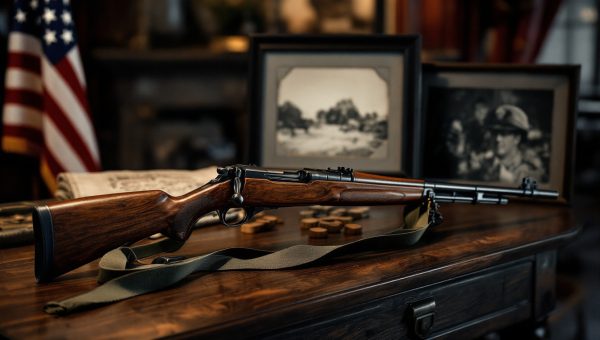
The older hand opens the action first. Every single time. Doesn’t announce it, doesn’t call it a lesson — just breaks it open or locks the bolt back, looks into the chamber, then turns the gun so the kid can look into the chamber too. Then it comes across. Grip toward the kid, muzzle at the dirt, and that half-second where both of them have a hand on it at once.
That’s the whole curriculum, and it got taught before anybody said a word.
Nobody describes it that way afterward. Ask a man about his first gun and you’ll get the make, the gauge, the stock that was two inches too long for him. He’ll remember who gave it to him and get a little quiet about it. What he’s remembering is a person. The gun is just the part of the memory he can say out loud.
And the gun almost never mattered. Half the men you shoot with started on something that would embarrass a modern catalog — a single-shot .22 with a bent front sight, a hand-me-down .410 nobody had cleaned since the previous owner, a bolt gun that had to be thumbed shut. None of it held anybody back. What decided whether they turned into shooters was who stood behind them.
Because a first gun is a bad teacher. It doesn’t know when your finger drifted, it won’t catch you sweeping the truck with the muzzle, and it has no opinion at all about whether you’re flinching. Everything that keeps a person alive and makes him worth standing next to on a line comes out of somebody’s mouth or somebody’s hand on your shoulder. The hardware is inert. The teaching is the whole thing.
A good one hands it over and then teaches by refusing. Not yet. Unload it and show me. Where’s the muzzle. Where’s the muzzle. Say it back to me. He makes it slightly boring on purpose, because boring is how safe habits stick before excitement writes over them. He sets the first target close enough that the kid will hit it, which is coaching so quiet most people never notice it was a decision. And he handles the gun correctly in front of other adults without a trace of self-consciousness, which teaches what no lecture can: this is how a grown man behaves around these, even when nobody’s grading him.
The bad one hands a twelve-year-old a 12-gauge and films his shoulder. That’s the whole trick to it, and a good number of people quit shooting at that exact moment and never told anybody why.
Now the part that’s changed, and it’s changed fast.
There are a lot of people buying a first gun right now who don’t have anybody. No grandfather with a deer rifle, no uncle with a bench in the garage, no dad who used to shoot and quit. Nobody got taught, so nobody’s teaching, and a couple of generations of that compounds into an adult — perfectly competent at the rest of his life — standing on a sidewalk outside a gun shop deciding whether he can make himself go in.
He’s not stupid about guns, either. He’s read everything, watched a hundred hours of video, and he can say “cant” and “sight radius” and still not know how to hand a pistol to another human being. Video teaches vocabulary. It can’t put a hand over your hand, and it can’t tell when you’ve started doing something wrong in a way you can’t feel yet.
So he comes in alone, and the next ten minutes decide something.
Most shops blow it. Not out of malice — out of habit. He gets the up-and-down look. He gets a question designed to establish how much he doesn’t know. He gets an expensive recommendation with a four-dollar nylon holster thrown on to round the ticket up, and whatever argument the two guys behind the counter were already having before he walked in. He buys something, he leaves, and he doesn’t come back. The gun goes in a drawer and that’s the end of a shooter.
A shop owes a first-timer three things, none of them expensive. Answer the question he actually asked instead of the one that lets you perform. Put a gun in his hands and teach him to open the action and look in the chamber before you say a word about price — because that’s the handover, that’s the grandfather’s job, and the counter is where it has to happen now. And point him at a human being: a class, a range with an instructor, the Tuesday night league, the old guy at your club who’d teach anybody who asked and has been running out of people to ask him.
That last one is the whole ballgame, and it’s free.
Because the thing being handed over was never the gun. The gun’s just steel with a serial number on it. What transfers is a set of habits and a way of carrying yourself, and it only ever moves from one person to another — which means it can stop. A chain like that doesn’t break with a bang. It breaks when a man walks in alone and nobody bothers to hand it to him.
You’ve got a gun somebody gave you. Somebody taught you to look in that chamber.
There’s a man at your range right now who nobody taught. Go be the hand.