Congress actually wrote this one down in plain words, which happens less often than you’d hope.
Somewhere this week there’s a deer camp with four guys in it and three different states on the plates parked outside. Before the week’s out, somebody is going to hand somebody else a rifle. That happens a hundred thousand times every November, almost nobody thinks twice about it, and almost nobody needs to — because for the part you’re actually doing, the law is on your side.
It’s the part nobody thinks about that bites.
The general rule lives at 18 U.S.C. §922(a)(5), and it says a regular guy can’t transfer, sell, trade, give, transport, or deliver a firearm to another regular guy he knows, or has reasonable cause to believe, lives in a different state. That’s it. That’s the rule. Across state lines, between two private people, it goes through a licensed dealer in the other fellow’s home state. No handshake, no “I’ll drop it in the mail,” no meeting halfway at a gas station in Erie.
Then the statute carves out exactly two things, and one of them is why deer camp works.
The first is inheritance — a bequest, or acquiring by intestate succession, which is lawyer for “nobody left a will and it came to you anyway.” The second one is the one you want, and here it is word for word: “the loan or rental of a firearm to any person for temporary use for lawful sporting purposes.”
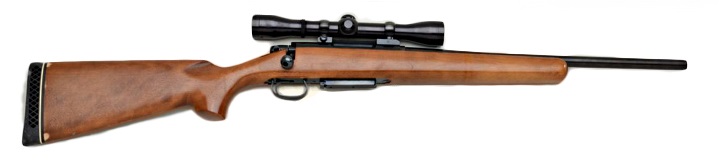
Look at what that actually hands you. Temporary. Lawful. Sporting. Your buddy drives in from Ohio, his rifle’s got a cracked stock, and he hunts your .270 all week in Pennsylvania — that’s a loan, for temporary use, for a lawful sporting purpose. You’d have a hard time building a cleaner example if you sat down and tried.
What it does not hand you is the drive home. The moment that rifle gets in his truck to go live at his house, you’re not loaning anything. You’re transferring. Different act, different paragraph, and the exception you were standing on doesn’t reach it.
“He’s bringing it back in the spring” is a sentence that sounds completely reasonable at a campfire and reads very differently anywhere else.
Getting to camp is the other half, and that’s §926A — the safe passage provision. It’s better than people think and narrower than people think, usually at the same time.
What it says is that if you can lawfully have the gun where you start, and lawfully have it where you’re going, you’re protected transporting it through whatever’s in between. The gun has to be unloaded. And neither the gun nor the ammunition can be readily accessible or directly accessible from the passenger compartment.
Here’s where damn near every article you’ll read on this gets it wrong. They’ll tell you a locked container is required, full stop, every time. The statute doesn’t say that. It says that if your vehicle has no compartment separate from the driver’s compartment, then it goes in a locked container — and it specifically rules out the glove compartment and the console.
Car with a trunk? The trunk is the separate compartment. That’s the job done.
Crew cab with nothing but a back seat? No separate compartment, so now you need the locked case, and the console you were about to use is named in the statute as the thing that doesn’t count.
The word “trunk” doesn’t appear in §926A anywhere. People have been quoting it at each other for forty years regardless.
And safe passage is a defense, not a force field. It’s the argument you make after the handcuffs, not a thing that stops them. Guys get arrested in New Jersey and New York and Maryland and spend real money proving they qualified for a protection they did in fact qualify for. Being right and being un-arrested are two separate outcomes, and only one of them is free. State law stacks on top of all of this, and in plenty of places it’s stricter than the federal floor.
So the deer camp version comes out simple enough. Let him shoot it. That one’s covered by name, in the statute, on purpose. Just make sure the rifle goes home in the same truck it showed up in.
And if he shoots it all week and falls in love with it — that’s what a dealer in Ohio is for. A transfer fee and a 4473 runs you less than one hour of a lawyer’s time, and it’s the only version of this where everybody sleeps fine.
I’m a gun guy, not your lawyer, and your state legislature gets a vote in all of this too.