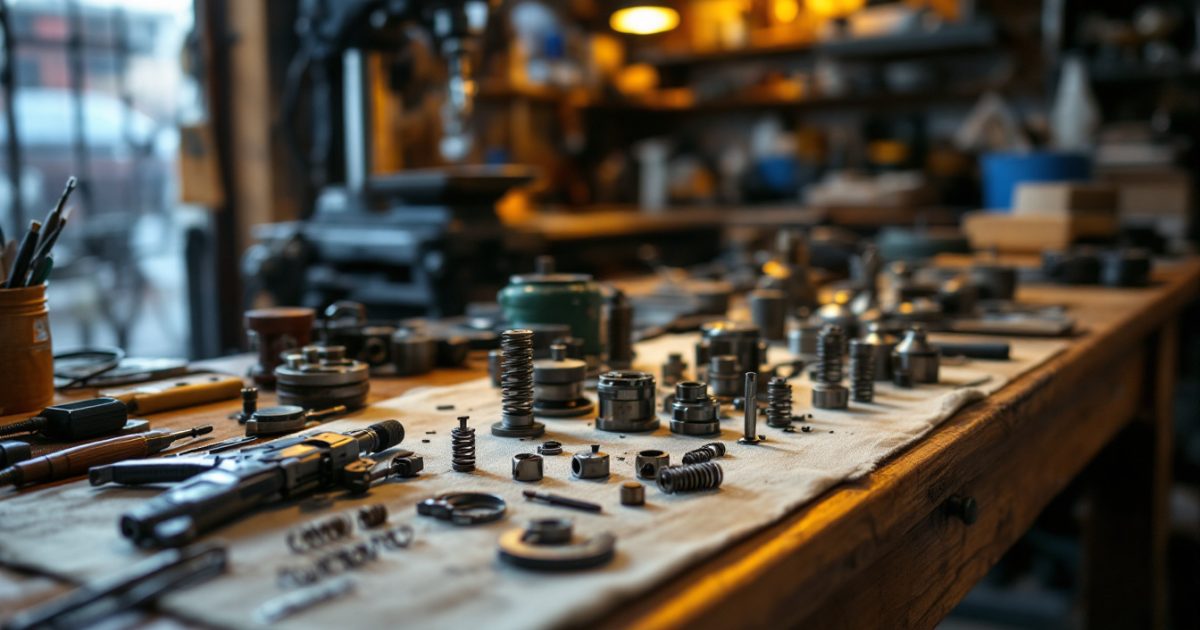
A state government ordered law-abiding citizens to hand over firearms they legally owned — guns they built themselves, in their own workshops, back when doing so broke no law at all. Not criminals. Not traffickers. Hobbyists, who got told by their own state: surrender your property or become a felon.
Last Thursday, a federal judge told Delaware to knock it off — which is quite the look for the state that slaps “The First State” on its license plates because it ratified the Constitution before anybody else. Apparently they stopped reading somewhere before the Second Amendment!
The Crime of Keeping What You Legally Built
Here’s the background. In 2021, Delaware passed H.B. 125, which made it a crime to manufacture, sell, or even possess an unserialized firearm — what the press breathlessly calls a “ghost gun.” Finish a rifle in your garage? Criminal. Still own the one you built in 2019, back when it was perfectly legal? Criminal.
On September 10, Judge Maryellen Noreika ruled in Rigby v. Jennings that the possession ban and the home-manufacturing ban are facially unconstitutional, and blocked Attorney General Kathleen Jennings from enforcing them against the plaintiffs. The Firearms Policy Coalition, which backed the case, called it “a major Second Amendment victory.”
(To be precise: the ban on sharing 3D-printing files and the restrictions on selling unfinished frames and receivers survived, so the fight isn’t over. But the two big ones — the bans that turned gun owners into criminals overnight — are dead.)
The judge’s own words are the brutal part. The plaintiffs, she wrote, “have been forced to dispossess themselves of firearms they lawfully owned before Delaware passed the Possession and Manufacturing and Assembly Bans.” The only thing standing between these citizens and their own property? “An unconstitutional statute.”
An unconstitutional statute! In the state that signed the Constitution first! You truly cannot make this up.
A “Ghost Gun” Is Just a Gun Without a Barcode
Let’s talk about that spooky branding for a second. A “ghost gun” is a firearm without a serial number. You know what your great-great-grandfather called a firearm without a serial number? A firearm.
Americans were building guns on their own workbenches before there was an America. The flintlock over the fireplace did not come with a barcode, and Washington didn’t even require serial numbers on all new guns until 1968. Delaware didn’t ban some sinister new technology — it banned the oldest gun tradition on the continent and dressed it up in a Halloween costume.
And the state’s actual reason? Judge Noreika cut right through it: “functionally ghost guns are no different than serialized guns.” The real point of the law, she noted, was making it easier for law enforcement to trace weapons after a crime. In other words: your constitutional rights end where the government’s paperwork begins. That argument just lost.
Don’t let anyone tell you the Supreme Court already blessed these bans, either. The VanDerStok case only upheld the ATF’s power to regulate commercial gun kits — it never said a state could ban you from possessing what you built.
Meanwhile, Down the Street in Delaware’s Own Courthouse
Now for the part that tells you where this is all headed. The very same week — same state — the Delaware Supreme Court upheld the state’s under-21 handgun ban. And how did they get around the U.S. Supreme Court’s Bruen decision, which requires gun laws to match this country’s history and tradition? Simple. They announced that Delaware courts “are not required to follow the federal government’s method of analyzing Second Amendment cases.”
Read that again. A state’s highest court looked at the Supreme Court’s test for a constitutional right and said: no thanks, we have our own method.
One state. One week. A federal judge enforcing the Constitution on Delaware’s politicians while Delaware’s own top court declares the Constitution optional. If some county clerk in Texas announced she wasn’t “required to follow the federal government’s method” on a right the media actually likes, we’d get three weeks of primetime specials about the “constitutional crisis.” For the Second Amendment? Crickets.
Here’s the thing, though — we’ve seen this movie. In 2016, Massachusetts’ highest court pulled the exact same stunt, deciding stun guns weren’t protected because they didn’t exist in 1791. The Supreme Court reversed them unanimously. Not 5-4. Unanimously. State courts that openly freelance around the Second Amendment eventually get their homework handed back with a big red F.
And the timing could not be worse for Delaware. The Supreme Court hears the AR-15 ban cases on December 2 — with the Justice Department arguing on the side of gun owners. Jennings can appeal Noreika’s ruling to the Third Circuit if she wants, but that’s the same court that already ruled unfinished frames and receivers are “arms” protected by the Second Amendment. That’s not an appeal. That’s a woodchipper with a docket number.
So picture the scene in the AG’s office this week: “We spent five years defending the confiscation of legally owned firearms, we’re 0-for-2 in federal court, the Supreme Court is warming up in the bullpen — quick, somebody draft the next ban!”
Because that’s the playbook, every single time. Pass it, enforce it, lose, never apologize, reload the legislation.
The First State should try reading the whole document it signed first. It’s only 27 amendments — the important one here is second on the list.